Old Tint That’s Failing Needs Removing
Window tint removal in Dubuque for vehicles with peeling, bubbling, or discolored film that’s affecting visibility
Peeling film, purple-tinted glass, and bubbles that won’t flatten out are visible signs that a window tint job has failed at the adhesive layer, and driving with deteriorating film creates a real visibility problem. Underdog Auto & Window Tint performs tint removal on vehicles of any make and model in Dubuque, clearing old film so drivers can see clearly or have fresh tint applied without adhesive contamination underneath. Dyed films are the most common failure type because the colorant breaks down with UV exposure before the adhesive releases, leaving a filmy, streaked appearance across the glass surface.
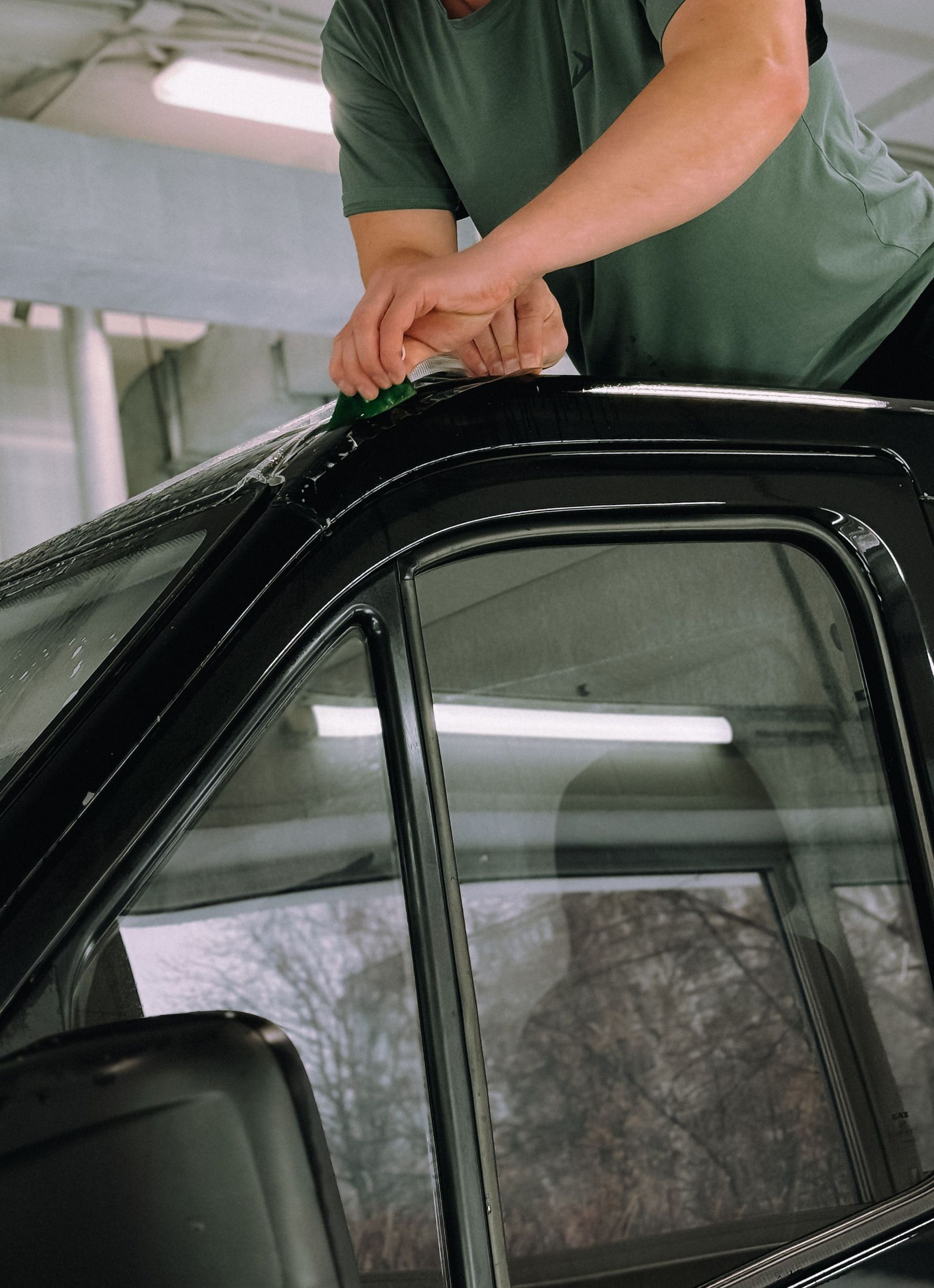
Removal involves softening the adhesive through heat application—typically a heat gun—then peeling the film in sections while the glass is warm enough to release the bond cleanly. On rear windows with embedded defroster lines, the removal technique has to account for those conductors to avoid pulling them off with the film, which is a step that gets skipped when removal is rushed.
Schedule a removal appointment at Underdog Auto & Window Tint to have old or failing film taken off without damage to the glass or defroster grid.
How Adhesive Residue Is Handled After Film Is Off
Once the film is peeled away, adhesive residue typically remains on the glass surface and has to be removed separately using a solvent or controlled razor technique depending on how much remains. Solvents that work well on flat glass can damage rubber seals and trim if they run off the edges, so application stays controlled to the glass surface throughout the cleanup process.
After removal and adhesive cleanup, the glass returns to clear, unobstructed visibility with no haze, streaking, or leftover adhesive texture. Drivers removing tint without planning to re-tint will find the glass looks factory-clean after the process; drivers prepping for a fresh application benefit from starting with contamination-free glass that won’t compromise the new film’s adhesion.
Some vehicles come from the factory with privacy glass—a coloring built into the glass itself rather than a film applied to the surface. Underdog Auto & Window Tint can identify whether a vehicle has factory-tinted glass or applied film before removal begins, which matters if the driver expects removal to return the glass to full transparency.
What Drivers Ask About Tint Removal
Tint removal questions usually center on whether the glass will be damaged, how adhesive residue is handled, and what to expect on rear windows with embedded defroster lines.
How is failing or bubbled window tint removed without scratching the glass?
Film is softened with a heat gun before peeling, which reduces the force needed to separate the film and lowers the risk of the adhesive dragging across the glass surface. Pulling too fast or without heat is what causes scratching, so the pace of removal matters as much as the technique.
What happens to the adhesive left behind after the film is peeled off?
Adhesive residue is removed with solvent applied directly to the glass surface, followed by a clean wipe to remove any remaining material before it redeposits. The type and amount of residue depends on how old the film is and how thoroughly the adhesive has bonded to the glass.
Why does old window tint turn purple or develop a haze over time?
Dyed window film uses organic colorants that break down under sustained UV exposure, causing the dye to shift toward purple or brown tones while the adhesive layer remains in place. The haze comes from the dye separating from the film substrate, which creates a frosted or milky appearance that worsens the longer the film stays on.
How does removal work on rear windows with embedded defroster lines?
The defroster grid is bonded to the interior surface of the glass, and aggressive scraping or pooling solvent can lift or break those conductors. Underdog Auto & Window Tint works around those lines carefully during both film removal and adhesive cleanup to keep the defroster functional after the job is done.
When is tint removal necessary before applying new film?
New film applied over failing or bubbled tint inherits the adhesion problems underneath, so removal is the correct starting point any time the existing film shows peeling, bubbling, or surface degradation. Attempting to re-tint over problem film results in the same failure pattern repeating more quickly.
Underdog Auto & Window Tint removes old and failing tint on any vehicle, and the same technician who handles removal can advise on fresh film options if you’re planning to re-tint afterward. Bring your vehicle in for an inspection to assess the current film condition before the removal appointment is set.